As Loran Scholars settle in on campuses across the country, universities are extending a special welcome to the newest cohort. Check out some of the stories they’ve published to celebrate incoming scholars below.
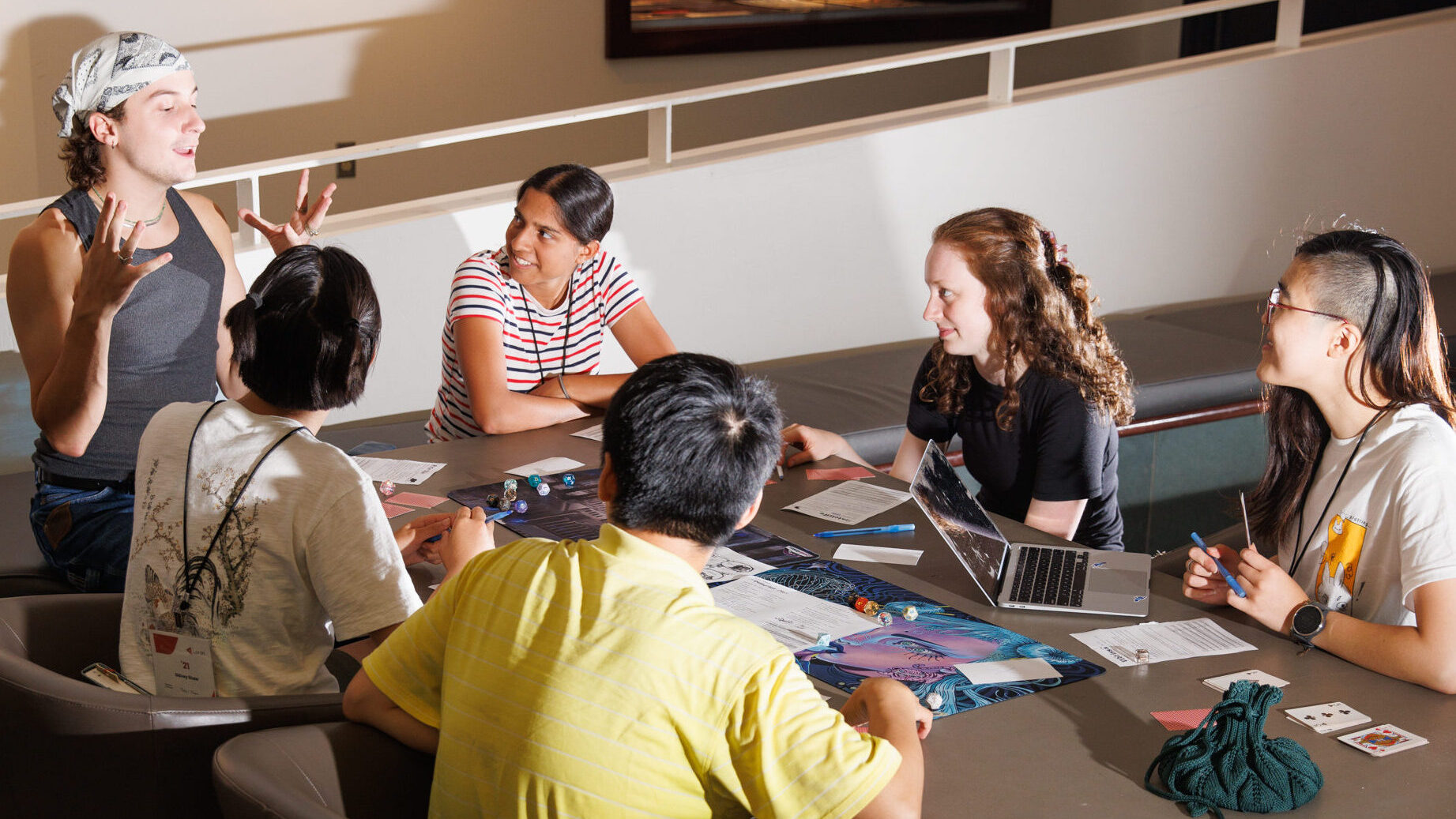
Every August, the first- through fourth-year Loran Scholars attend the Scholars’ Retreat, where they make new connections, strengthen existing bonds, and build trust in one another as they come together for four days of reflection and growth that expand scholars’ capacity to address the challenges of the future.
Our annual retreat marks the transition from the Summer Experiential Learning Program to a new academic year, helping scholars return to school refreshed, grounded, and inspired to learn, lead, and give back.
This year marked our first retreat hosted on a university campus, made possible through the generous support of Queen’s University. We are deeply grateful for their partnership and continued commitment to creating meaningful opportunities for our scholar community. 2024 Johnston Loran Scholar Hannah Daley shares her reflection on the 2026 Scholars Retreat.
“With every retreat, I am reminded of how special the Loran community is. I leave each year feeling humbled at the accomplishments and growth of my fellow scholars, and inspired by their initiative as we chat and share life updates.
During our workshops and scholar-sharing circles, we connect through meaningful conversations about the pressures of university, our individual backgrounds, our struggles and accomplishments, and where we want to go from here. These conversations, and the small (or large) ways our perspectives change each retreat, show how much we continue to transform throughout this process and learn from each other.
Thinking back to how I was always looking up to and learning from upper-year scholars, it doesn’t feel like enough time has passed to be one myself today: another sign of just how fast we are all growing! Every year, I understand more and more how fast this time goes by. You start your Loran journey on the Outward Bound camping trip and then at your first retreat, and it feels like everything is just beginning. Then, all of a sudden, after the fun and stress of your first couple of years of university, you find yourself in the home stretch of your time in Loran, with most of your retreats under your belt. The more retreats I attend, the more I want to squeeze as much out of the remaining ones that I have left, and of my time as an in-stream scholar with the rest of my cohort.
Every year I’m pleasantly surprised by how close our community is despite living all over the country, and the ways we choose to prioritize our connections with each other. Retreat is a special way for all of us to touch base at one focused time, but we are constantly checking in on each other throughout the year. Whether we are visiting one another when travelling and in need of a good place to crash, sharing opportunities with each other, working together on projects, or just connecting for a good chat, we always keep each other in mind. Retreat acts as a special way to come together before the transition into the next academic year. One of the most memorable parts of retreat for me is hearing everyone’s reflections on our days together and hearing what they’re taking into this next year with them.”
Retreat is merely one of the transformational experiences the Loran Award offers to empower scholars to grow by challenging their limits and to develop their ability to lead with integrity, in order to build a brighter future for all.
Learn more about Loran’s four-year leadership-enrichment program, financial support for undergrad, diverse opportunities for experiential learning, and its long-term supportive community of peers and mentors.
During academic breaks, Loran Scholars gain practical skills in the professional world they will one day contribute to. Loran engages with an extensive network of employment partners, supporting scholars to find placements that best leverage their talents and nurture their growth.
During academic breaks, Loran Scholars gain practical skills in the professional world they will one day contribute to. The Summer Experiential Learning Program opportunities represent some of their most transformative Loran experiences.
Loran equips scholars with the skills, network, and confidence to seek out placements that align with who they are and where they want to go. With access to an extensive network of employment partners, scholars then take the initiative to find roles that best leverage their talents and nurture their growth. Currently, 71 scholars are lending their talents to a variety of organizations and companies across 12 provinces and territories in Canada and six other countries spanning three continents. This summer, some employers included Alberta Neuroscience in Calgary, the MaRS Investment Accelerator Fund in Toronto, Helicopters Without Borders in Vancouver, Presse-Ouest Ltée in Winnipeg, Académie canadienne du cinéma et de la télévision in Montreal, Nature Trust of New Brunswick in Fredericton, Ecology Action Centre in Halifax, and ArcticNet in Yellowknife. For the third consecutive year, Polar Bears International welcomed a Loran Scholar for the summer and recently highlighted the experiences of current and past scholars who have contributed to the organization.
Reflecting on their past year’s summer experience, scholars reported that:
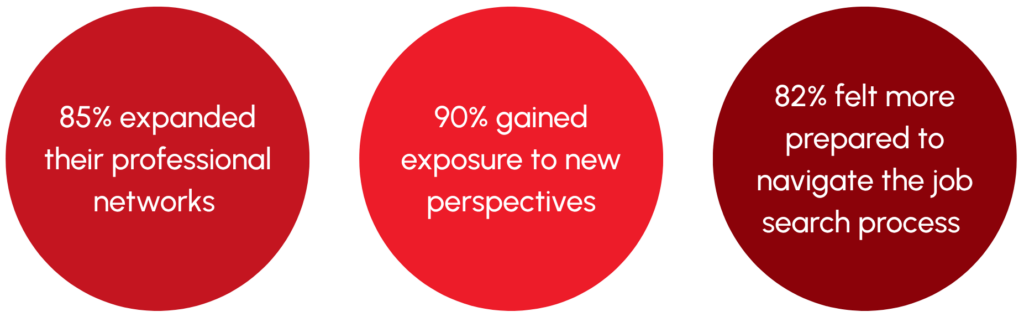
Whether spent in Canada or abroad, Loran summers provide scholars with greater breadth and understanding of the intersections between three major economic sectors and the role each plays within the local, national, and global community.
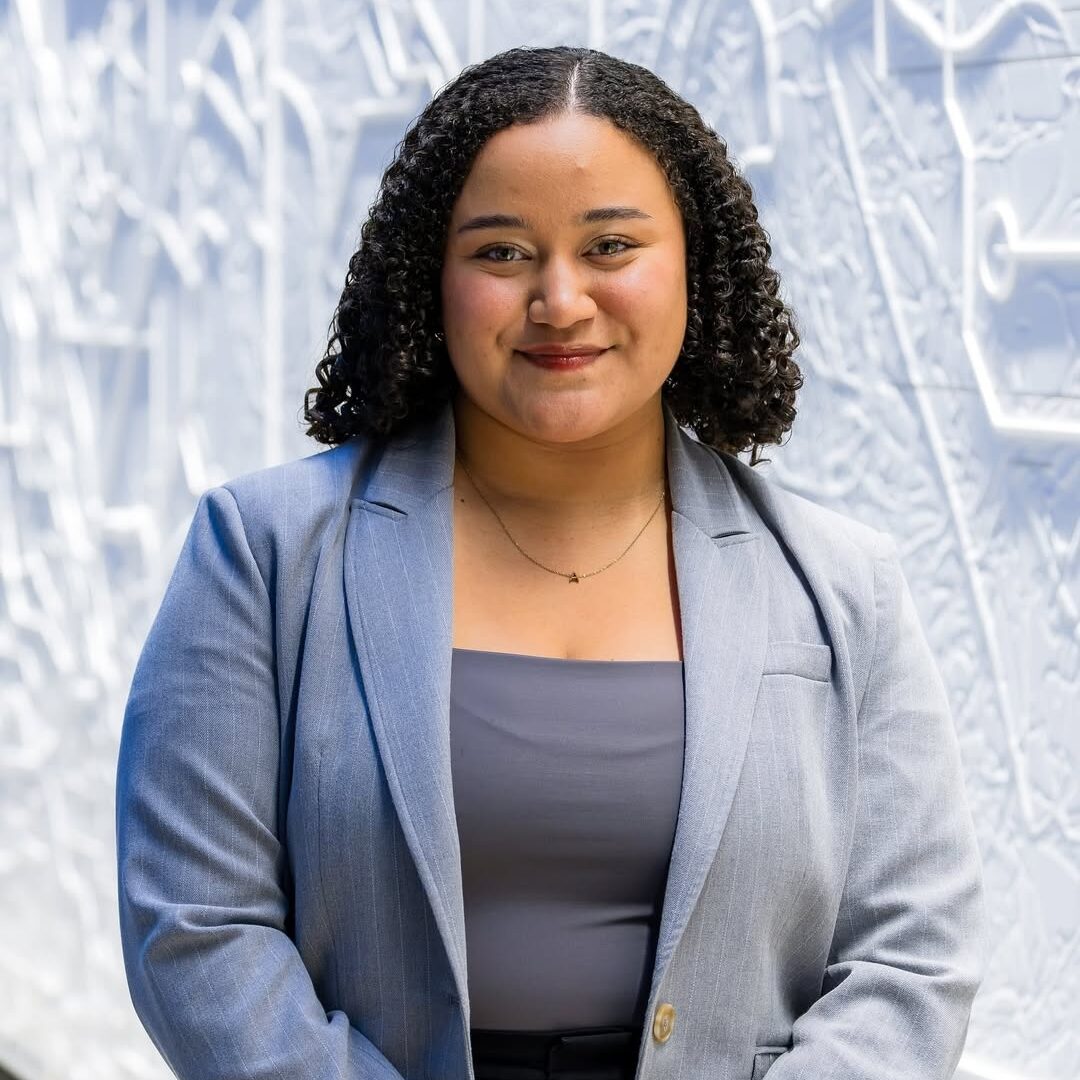
During my public policy summer at Women’s Shelters Canada, I conducted in-depth research on gender-based violence (GBV) across Canada. This involved analyzing legislation, engaging in outreach to institutions and local shelter associations, and contributing to the development of practical reports supporting advocacy work with government bodies. It was my first time living out of province, and I would not have taken that leap out of my comfort zone without Loran’s support and encouragement. The experience was transformative; contributing to work with real-world implications—used by shelters and activists on the ground—was incredibly meaningful and reaffirmed my belief in research as a powerful tool for change. It also helped me realize that GBV is the field in which I hope to build my career.
Mariana Cueto Mendoza
2023 Heaslip Loran Scholar
Public Policy Summer
Women’s Shelters Canada, Ottawa, ON

For my community development summer, I worked with No Name Kitchen, helping migrants living in a camp on the French-Italian border. Organizing showers, first aid, laundry, social support, and food distribution—our team adapted to the needs people expressed. I believe that the only way to truly understand the challenges of immigration and borders is to go out into the field and listen to the stories of those affected. At the camp, there were a multitude of issues I had never faced before. These experiences taught me to be an attentive, vigilant, and flexible leader. Although the logistics surrounding my summer experience were atypical and complex, the Loran program offered dedicated support and an incredible opportunity that was crucial for my journey and my heart.
Luka Bordeleau
2022 Loran Scholar
Community Development Summer
No Name Kitchen, Ventimiglia, Italy
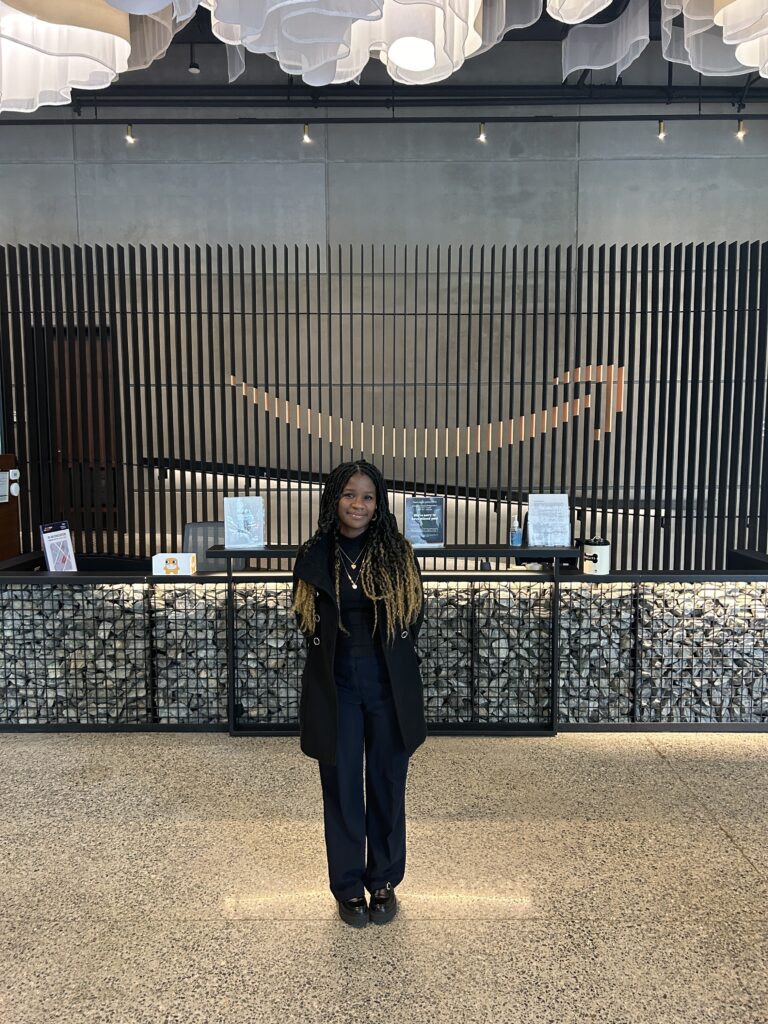
I spent my enterprise summer at Amazon developing and streamlining software systems, including leading a project addressing an issue affecting over 300,000 customers and saving 800 hours of manual work annually. Beyond the code, I volunteered through Amazon’s Black Employee Network and Women in Engineering, participating in initiatives like shoreline cleanups and supporting the Greater Vancouver Food Bank. I was initially concerned about making a meaningful impact and staying true to my service-focused values at such a large company, but I found many ways to do both. This experience showed me that technology and community care can go hand in hand. Loran gave me the confidence to show up fully in both spaces—as an engineer, a volunteer, and a growing leader.
Tumi Fabiyi
2023 R. Howard Webster Loran Scholar
Enterprise Summer
Amazon, Vancouver, BC
Are you an employer? Learn more about hiring a Loran Scholar for a summer opportunity.
“What is the one thing you are going to build that will change the world?” were the first words Dhruv Patel (’18) spoke to Armon Shokravi (’18) on their taxi ride from the Toronto airport to Loran’s 2018 National Selections. From Fort McMurray, AB, and Vancouver, BC, respectively, the pair were exhilarated to be in the company of other graduating high school and CEGEP students who, despite their young age, were ready to embrace the challenge of leaving the world better than they found it. Armon shares, “becoming Loran Scholars was an inflection point in our lives. Dhruv and I believe two founder traits often determine how far a business can go: the resilience to keep pushing through setbacks, and the confidence to think bigger than what feels immediately possible. Receiving the Loran Award helped bolster us both with a lot more confidence and surrounded us with people who challenge the status quo, much sooner than some come into that in their lives.”
In 2020, as fellow in-stream Loran Scholars, Dhruv, a Mechatronics Engineering student at the University of Waterloo and Armon, a Business student at Western University, co-founded Aftersell – the leading eCommerce platform that helps 50,000+ merchants optimize their checkout flows, democratizing technology previously only available to large businesses. Aftersell’s organizational values (drafted by the two alumni) reflected Loran’s influence by celebrating strength of character, commitment to service, and leading with integrity for the collective good. Later, when Dhruv and Armon connected with Rokt and CEO, Bruce Buchanan, the company that would go on to acquire Aftersell, they immediately identified it as another like-hearted organization, whose culture and mission similarly prioritize values such as ‘smart with humility’, ‘better together’, and ‘force for good.’
“We wouldn’t have arrived at Rokt with Aftersell had we not had the Loran values – that’s how closely they are aligned,” shares Dhruv.
Full Circle: From Scholars to Builders
“Loran was a step change in my life,” shares Dhruv. “Receiving the Loran Award felt very confidence-inspiring. It encouraged me to think bigger about what I could do in the world, and provided me with both the self-belief and the skills to lead a large team. There were many intangible elements of the Loran program that I look back on now and realize were the underpinning of much of my current work, such as the constant encouragement to try things outside my comfort zone. Every entrepreneur I speak to along my journey says, ‘stepping outside your comfort zone is a requirement for the job,’ and I was fortunate enough to have Loran embolden me to pursue unconventional paths at an early age.”
“None of what we are presently doing in our lives would have happened without Loran. From having met one another, to forming a supportive community with other scholars and alumni, to the broadening of our perspectives and the enrichment of our skills throughout the program, it all had a monumental impact on our lives, and we carry the Loran values and lessons learned with us every day,” adds Armon.
Now successful entrepreneurs helping to build a global technology company, and beneficiaries of a program and community that recognized their promise and provided the resources, mentorship, and network to unlock their full leadership potential, Dhruv and Armon are choosing to give back—reinvesting in the Foundation and pledging to underwrite the journey of a 2026 Shokravi Patel Loran Scholar, ensuring that the same door remains open for the next generation. They are the youngest alumni to ever underwrite a Loran Scholar.
And for them, this isn’t just a financial contribution—it is a deeply personal act of service. “Through entrepreneurship, we can create impact at scale,” they explain. “Like Aftersell, it empowered many small businesses to grow, and that kind of effect can ripple through entire communities. It also provides us with resources we can then reinvest through philanthropy. For us, both building and giving are our expressions of service.”
The Power of Paying It Forward
The decision to underwrite a scholar stems from a shared belief in the importance of paying it forward. For Dhruv and Armon, the Loran experience was a catalyst that helped shape their leadership and entrepreneurship journeys.
Dhruv recalls a pivotal moment during his years as a Loran Scholar, when a perspective-shifting conversation with alumnus Stephen Lake (’07), CEO of Jetson Home Inc. (then Co-founder & CEO of Google-acquired North), guided him to pursue entrepreneurship instead of following a more traditional career trajectory. “As a fellow member of the Loran community, I trusted Stephen’s advice to follow my instincts,” says Dhruv. This type of peer support by a Loran alum was one of countless touchpoints that collectively inspired both Dhruv and Armon to develop their purpose through entrepreneurship.
“That’s why, when we thought about where to meaningfully give back, underwriting a Loran Scholar was the clear answer. For us, the Loran Award was so much more than a scholarship—it was the foundation for how we think, how we lead, and how we built Aftersell.”
“The program gave us confidence early, removed financial pressure, and surrounded us with people who pushed us to really challenge ourselves. Since Loran created that kind of transformation for us, the most meaningful thing we can do is help create that same opportunity for someone else. It’s about continuing that cycle of investment,” the pair notes.
By underwriting the four-year journey of a Loran Scholar, they are providing another exceptional young person with:
Dhruv and Armon’s commitment ensures that another high-potential youth will benefit from the same launchpad they did, unlocking their potential to grow, serve, and lead.
As Loran enters its 38th year, moments like this reflect the enduring impact of its mission—to cultivate leaders who act with character and a deep commitment to others. Thank you, Dhruv and Armon, for investing in the leaders of tomorrow and demonstrating how that commitment comes full circle.
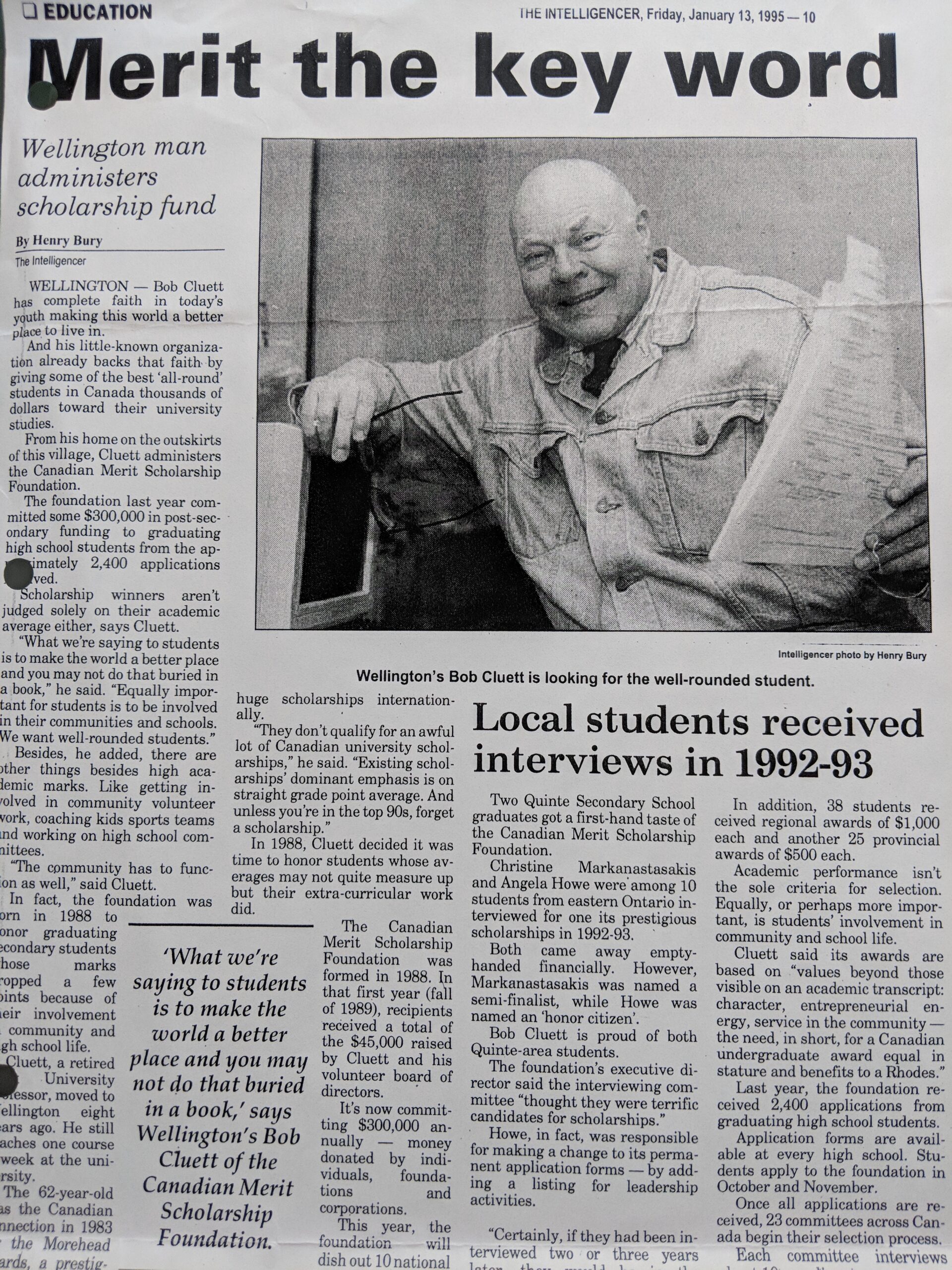
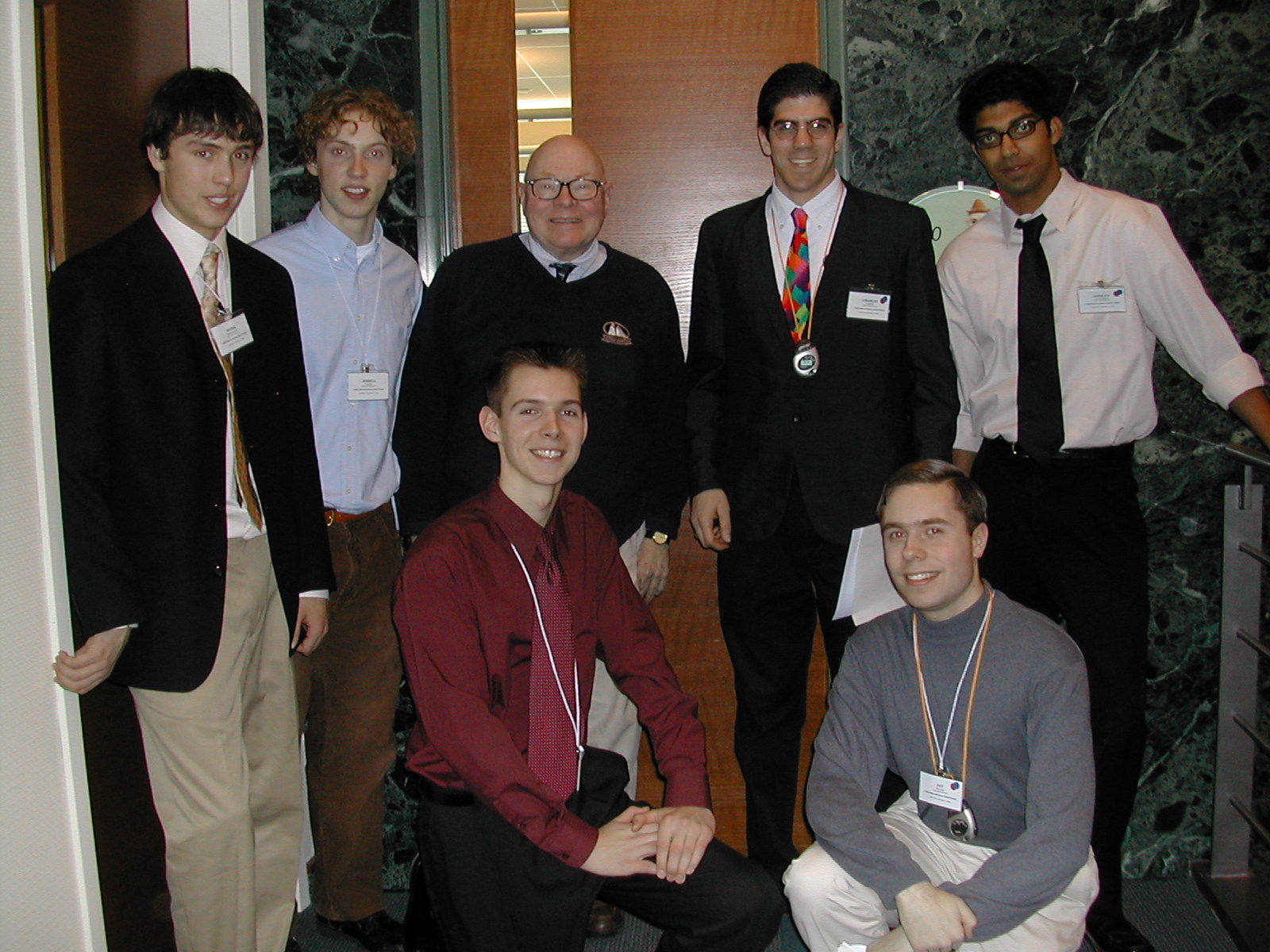
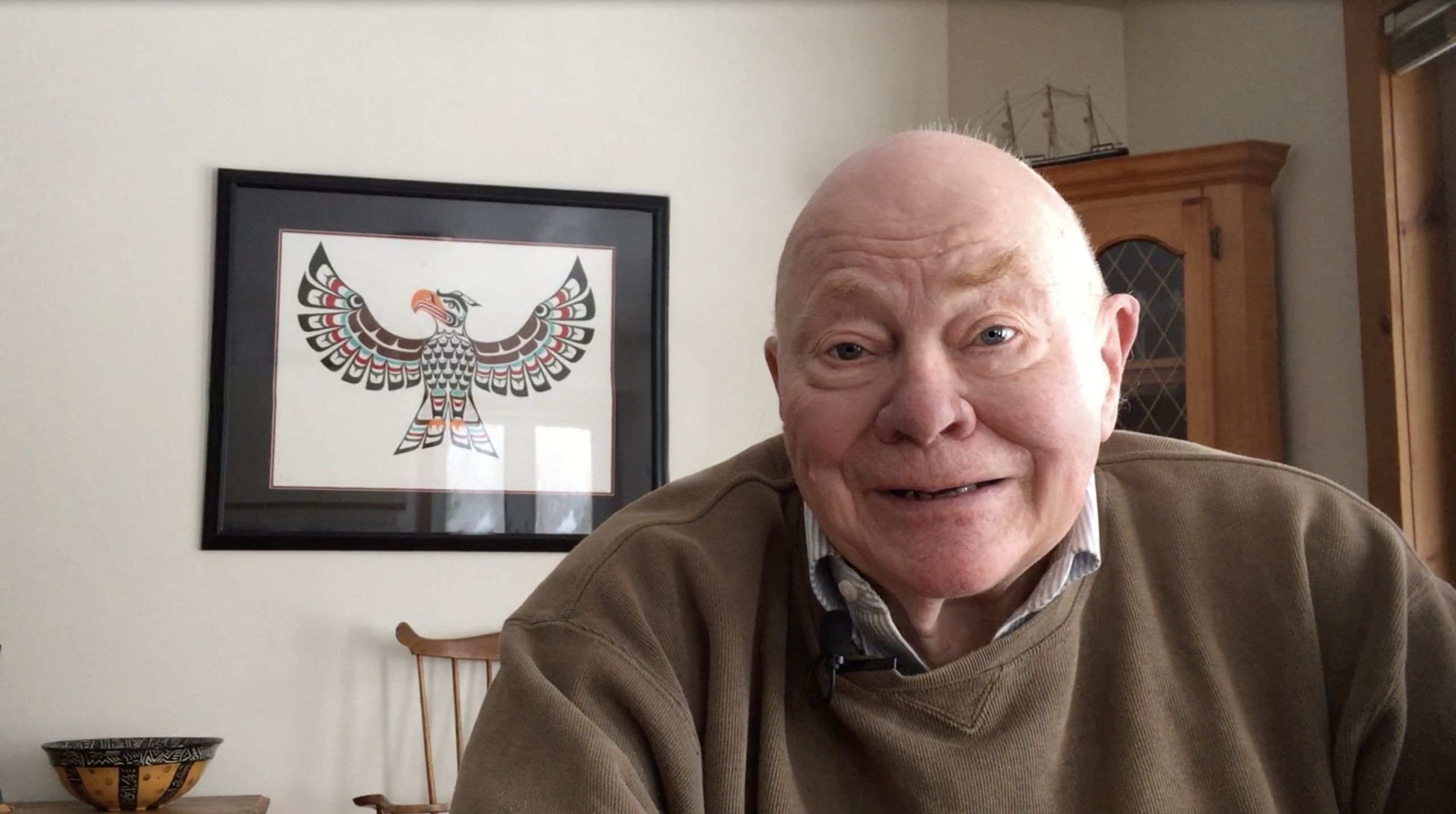
It is with deepest sadness that we announce the passing of our esteemed Founder, Dr. Robert Cluett. On this occasion, the entire Loran community is reflecting on Bob’s broad and lasting contributions to Canada’s leadership ecosystem with profound gratitude.
In 1989, Dr. Robert Cluett took early retirement from his role as Chair of York University’s Graduate English department to become the founding Chairman and CEO of the Loran Scholars Foundation (then known as the Canadian Merit Scholarship Foundation). Over the subsequent three decades, Bob’s unconventional philosophy of looking beyond grades to identify individuals with a unique strength of character, which he believed was a better marker of future potential, has had a transformative impact on the lives of thousands of young Canadians.
During his time as a university professor at York University, Bob grew concerned watching that many talented young Canadians were being attracted to the States for post-secondary. He became determined to create a scholarship that would incentivize Canadians to study on Canadian university campuses. Furthermore, Bob recognized a significant gap in the Canadian system of financial assistance for university students (such funding tended to be directed to only two groups: those with exceptionally high academic averages and those with phenomenal athletic abilities).
Bob was committed, instead, to actively seeking out and providing financial support and mentorship to exceptional young Canadians who showed strength of character, the drive to leave their communities better than they found them, and sparks of exceptional leadership potential. An early proponent of merit-based selection, Bob believed that character is demonstrated by what students do with the opportunities they are given—within the context of their backgrounds and upbringings. He insisted that “breadth, openness to challenge, and willingness to take risk are many times more important than any quantitative measure of promise.” This created an opportunity for students from all regions and socio-economic statuses across Canada.
Loran became the country’s first national organization of its kind. Bob built the Foundation on a vision that was unique, ambitious, and optimistic: to find, equip, and empower Canada’s next generation of young people who are driven by integrity, curiosity, courage, grit, and a high level of inner-directedness. Bob believed that Canada would prosper if we ensured that these high-potential students were given the opportunity to imagine, explore, and create the future.
Founded in 1988, Bob brought his vision to life through an ambitious and deeply collaborative community project: he rallied a small group of committed trustees (David Bell, David Crombie OC, Doug Grant, Kim Echlin, Dick Helmstadter, Karen McCrae, Mary Turner, Frank Vasilkioti, and Karen Wilson) to help build something entirely new. Together, they pioneered an innovative co-investment model: securing commitments from five founding university partners – McMaster, McGill, the University of Toronto, Waterloo, and York – to leverage donor contributions by providing matching tuition waivers for Loran Scholars.
“Bob Cluett built something that is genuinely rare: a vision compelling enough that an entire community of volunteers, donors, universities, and young people has chosen to protect and carry forward for nearly four decades. He believed that character was the truest measure of young people’s potential, and he never wavered from that conviction. His legacy is not a plaque on a wall. It is the 800-plus Loran Scholars who are quietly and steadily helping make this country better. The Loran Scholars Foundation is his gift to Canada, and on behalf of the Board, I am deeply grateful for everything he has given us.”
– Mike Johnson, Board Chair; President & CEO at REDspace
This approach effectively doubled the impact of donors’ contributions and ensured the program could be both generous and sustainable from the outset. Supported by volunteers and donors, Bob designed an award that would combine financial support with a breadth of developmental opportunities, enabling scholars to study in Canada while preparing to reinvest their talents in tackling the country’s most complex challenges.
Bob retired from hands-on service at the Foundation in 2001, but acted as National Co-Chair of Interviews from 2002 to 2010 and continued to serve as a formal and informal mentor to countless scholars, and as a member of Loran’s Honorary Council, providing wise counsel and guidance as Loran continued to grow and evolve for 37 years after his founding.
He remained a donor and Cornerstone Benefactor to the endowment fund to the end of his life. Through his lifelong efforts to find, nurture, and retain leaders of integrity, Bob supported over three decades of compassionate, ethical, respectful, courageous, and determined leaders – comprising a network of over 800 scholars and alumni – who are now shaping the landscapes of their diverse fields and building bridges that unite all Canadian citizens in the dream of a brighter and more just tomorrow.
Over the past 37 years, the Loran Scholars Foundation has continued to be driven by Bob’s original vision and has raised over $87M in charitable contributions from individuals, families, foundations, and corporations from coast to coast to coast. These funds have made possible undergraduate awards for more than 3,600 promising high school and Cégep students, changing the trajectories of their lives.
We venture that there is no leader in education who has given more to generations of promising Canadian students than Bob. He described his years with the Loran Scholars Foundation as “the best thing that ever happened to [him] — a truly luminous and life-making experience.” We’re certain that all those whose lives Bob touched hold a similar impression of his meaningful impact on their journeys, and share in our feelings of appreciation and loss today.
Bob’s impact on the Loran community is best measured through the stories and connections he forged over the decades. We know that many of you carry personal memories of his mentorship, his wit, and his unwavering belief in the potential of young leaders.
If you wish to share a reflection, a note of condolence, or a favourite story, we welcome you to send these tributes to rememberingbob@loranscholar.ca. Your words will serve as a comfort to his family and a lasting testament to the legacy he leaves behind. If you would like your message to remain private and/or anonymous, please don’t hesitate to request that.
Bob’s family is holding a Celebration of Life on Sunday, June 7, from 1:00–3:00 p.m. in Highline Hall at the Wellington Community Centre (Arena building).
We are thrilled to share that Loran alum Luka Bordeleau (’22) was named one of the 30 newly selected McCall MacBain Scholars. Open to students worldwide and selected for their purpose and integrity, the McCall MacBain Scholarship supports students pursuing a professional degree or a master’s at McGill University. Luka is the third Loran Scholar to have received this distinction.
From a young age, Luka was drawn to storytelling – spending hours reading and imagining characters and worlds of his own. That early passion proved formative, shaping his path toward anthropology, a discipline grounded in dialogue and the sharing of human experiences. He attributes his interest in the field to its ability to tell and elevate meaningful narratives, noting, “I’ve always loved stories and anthropology allows me to explore and amplify those that might otherwise go unheard.”
This fall, Luka will pursue a Master’s degree focused on the realities of migration and exile. His research explores the often-unseen volunteer efforts surrounding the deaths of migrants in Italy—asking difficult but important questions about who cares for those who pass far from home, who reconnects them with their families, and how these practices evolve within shifting political contexts.
During his Loran Summer in the not-for-profit sector, working for No Name Kitchen in Italy, Luka experienced a pivotal awakening. “That undertaking changed everything for me,” he recalls. “It made me realize I wanted to dedicate my work to issues of migration and mobility. Thank you to the Loran community, including my mentor, Catherine Côté (’16), my coach, Kanishka Sikri, staff, and fellow Loran Scholars and alumni, for helping me turn that realization into a clear direction.”
Throughout his undergraduate studies as a Loran Scholar, Luka found that the financial support and sense of community allowed him to become actively engaged in community projects that helped him discover the type of changemaker he wants to become – an experience he describes as formative in clarifying his values and ambitions. “The relationships I built showed me what truly matters to me,” he says, adding that he now feels equipped to pursue his future projects and aspirations with a strong sense of confidence and purpose.
As he prepares to join the McCall MacBain Scholars community at McGill, Luka is especially excited to connect with others who share a commitment to community and impact. For someone who has always been inspired by stories, he looks forward to learning from the diverse experiences of his fellow scholars and continuing to ensure that meaningful, overlooked perspectives find their way into the light.
Across Canada and beyond, Loran volunteers represent a diverse spectrum of business & community leaders–educators, entrepreneurs, nonprofit champions, civil servants, and professionals spanning science, medicine, law, the arts, and commerce. Each year, dedicated assessors and interview volunteers bring their distinct experiences of values‑based leadership to one of the most intensive undergraduate award selection processes in the country. They step into an unconventional role: not just reviewing applications, but also seeking out the intangible qualities that reveal a young person’s exceptional potential for integrity-driven, community-oriented leadership.
Loran volunteers recognize that there isn’t one ‘right way’ to be a Loran Scholar, and that the demonstration of character, service, and leadership is unique for each individual. They acknowledge that effective and inspirational leadership can take many forms—that it is more of a practice than a position—and, therefore, that leadership potential cannot be measured by a list of activities, accolades, and accomplishments alone.
Through thoughtful observation, insightful questions, and reflective dialogue, assessors and interviewers help uncover the stories and motivations beneath applicants’ achievements—the courage behind quiet decisions, the empathy that drives everyday actions, and the integrity that guides young people in building stronger communities.
We asked three Loran Selections volunteers to reflect upon some of the more intangible qualities and values that help them identify applicants who show sparks of truly authentic and extraordinary leadership potential.
For Bineta Ba, Director of Partnerships and International Development at the Marcelle and Jean Coutu Foundation in Montréal, whose work advances access to healthcare, education, and youth development across Africa and Haiti, that spark often lies in authenticity.
“Beyond achievements, what guides me most is authenticity… when there is coherence and reflection behind the choices.” In her experience, the “Loran factor” emerges when humility and ambition coexist: when a person is driven not by a desire to impress, but by a sincere commitment to contribute.
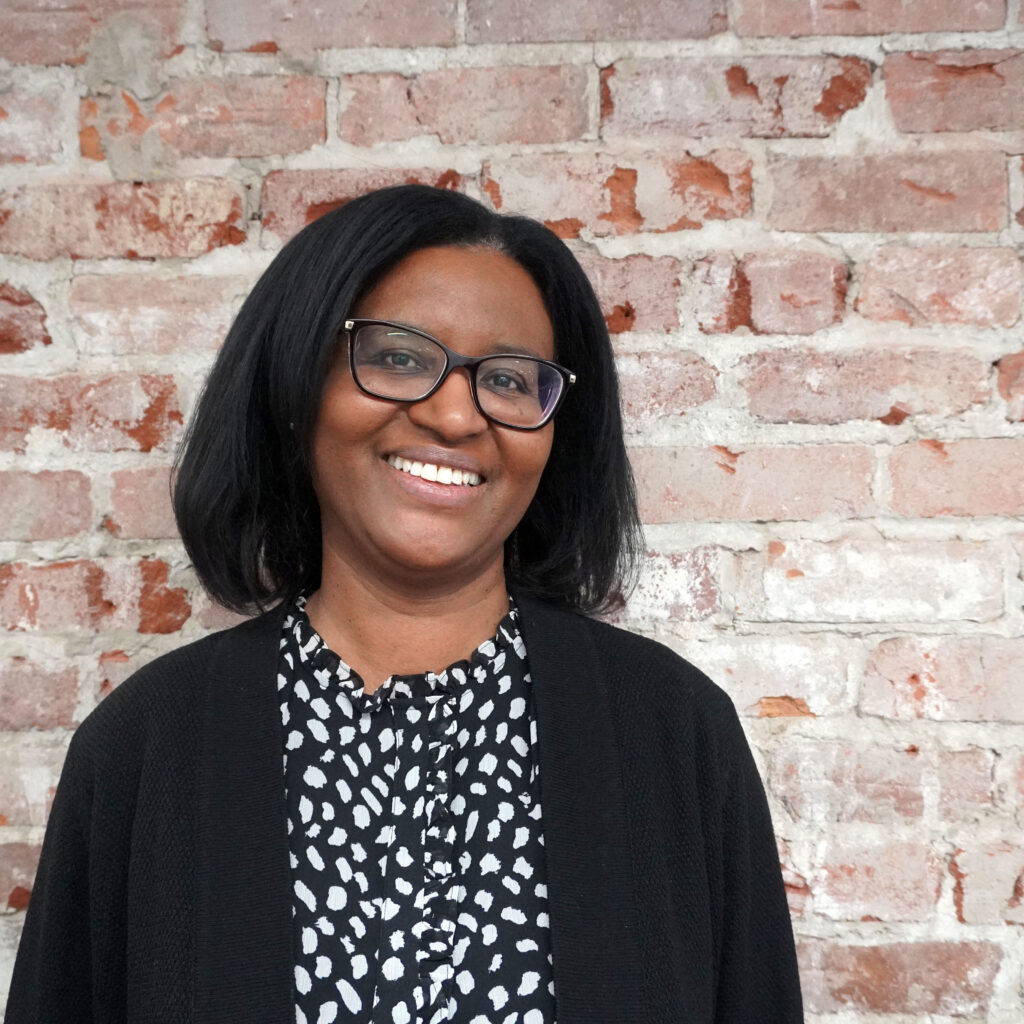
“The ‘Loran factor’ appears when a person combines humility and ambition… not only through what they do, but through the reasons that motivate them.”
She recalls moments where leadership revealed itself quietly: in an applicant’s recognition of their community’s generosity toward them, and in their sincere desire to give back. Demonstration of this sense of purpose-driven responsibility, she notes, is often a clear indicator of integrity.
“It is also the courage to think outside the box, to go beyond the comfort of what is known or agreed upon. It is not necessarily about being revolutionary, but about acting with sincerity and conviction to contribute, in one’s own way, to making our world a little – or a lot – more beautiful.”
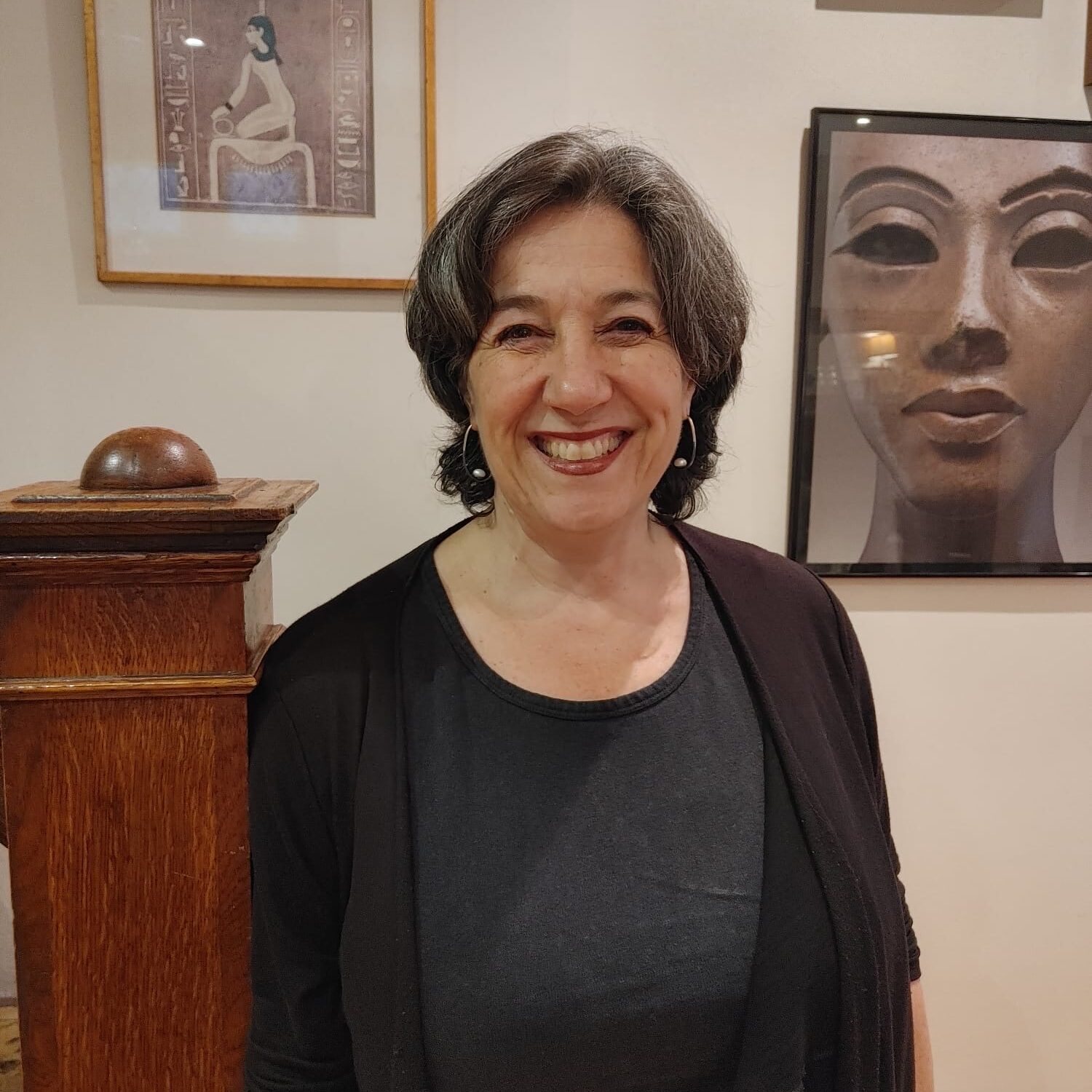
Andrea Vagianos, a longtime arts leader and former Managing Director of Tarragon Theatre, is now an arts consultant. Her career has also included extensive service on arts boards and peer assessment panels, most recently on the Toronto Arts Council’s Theatre Committee.
She shares, “I am always struck by honest and thoughtful responses. Confidence is important, but some demonstration that a candidate is considering a question that’s posed, revealing that they are aware that life is a learning proposition for which they may not have all the answers, is especially compelling to me.”
Andrea Vagianos, a longtime arts leader and former Managing Director of Tarragon Theatre, is now an arts consultant. Her career has also included extensive service on arts boards and peer assessment panels, most recently on the Toronto Arts Council’s Theatre Committee. She shares, “I am always struck by honest and thoughtful responses. Confidence is important, but some demonstration that a candidate is considering a question that’s posed, revealing that they are aware that life is a learning proposition for which they may not have all the answers, is especially compelling to me.”
Evidence of enduring commitment has also stood out to Andrea. She remembers encountering a candidate who, after volunteering their skills to support a small local business, continued to check in long after the initial need was met, demonstrating an understated but powerful example of sustained, community-oriented service.
Loran alum, Ilakkiyan Jeyakumar (’16), is a Research and Development Engineer at Biohub in San Francisco, building novel instrumentation to accelerate basic science research and developing low-cost diagnostic technologies for global health. On weekends, he volunteers to support vulnerable populations.
Reflecting on his own selection experience as a Loran Scholar, Ilakkiyan shared, “It left an indelible mark, and conversations and reflections from that experience still bounce around my mind to this day. I hope that I’m able to pass along a similar spark of inspiration, in much the same way that selection staff and volunteers did for me all those years ago.”

For this alumnus-turned-selections volunteer, the intangible values of Loran Scholars are unmistakable when present. “Every now and then, a hunger makes itself known in candidates… they seek to see the world as it is and toil to make it as it should be. This is often paired with genuine humility and an innate motivation to bring others along.”
For Ilakkiyan, integrity-driven leadership reveals itself through thoughtful, community-oriented action—the sort that results from a unique combination of foresight and ambition, and is taken not for personal gain, but for “the continuity, longevity, and amelioration of a community.”
Through their contributions to Loran’s selections process, all of the aforementioned volunteers demonstrate the very type of community-strengthening action described by Ilakkiyan. Across each of their perspectives, a common thread emerges: Loran Scholars are not defined by what they have done, but by how and why they do it. They model a fundamental and consistent alignment of values, intention, and action that signals the potential to lead with integrity and serve with purpose. And this extraordinary commitment to leading in accordance with one’s values and purpose is practised by Loran volunteers themselves. At every stage of Loran’s selection process, they dedicate themselves to service, grounded in a shared belief in supporting young people who will accept the challenge of building a better world. Our sincere gratitude to the nearly 800 individuals, including 127 mentors, for their pivotal role in recognizing untapped promise and shifting scholars’ trajectories.
Last month, we announced the Class of 2026, and communities from coast to coast to coast—including English and French media outlets—are celebrating the incoming cohort. Catch up on the news below:
Across Canada, youth civic participation remains alarmingly low. In the 2021 federal election, fewer than half of eligible voters aged 18–24 cast ballots, compared with three-quarters of Canadians aged 65–74 (source). Loran alumni Grace Lowes (’16) and Lily Bateman (’17) could no longer ignore this worrying pattern and decided to act.
Their academic and professional paths are not centred directly on politics: Grace is a third-year Juris Doctor student at Osgoode Hall Law School. She is currently completing a placement with the Chippewas of Rama First Nation through Osgoode’s Intensive Program in Indigenous Lands, Resources and Governance. Lily is a senior AI infrastructure developer working in the cybersecurity industry who also volunteers with Artificial Intelligence Governance & Safety Canada. But, like many Loran Scholars, they share a commitment to identifying challenges that affect their communities and working toward finding—or creating—meaningful solutions.
Together, they founded Action Pact, an initiative designed to help young Canadians better understand how democracy works and how their participation can shape it. Their starting point was a simple but significant question: Why do so many young people feel disconnected from civic life?
“There’s no incentive for politicians to appeal to young voters because we do not show up at the voter booth,” Grace explains. “Young people don’t vote, don’t show up to town halls, don’t email their MPs. Decision makers respond to signals, and participation is measurable.” The problem was clear: when youth participation is low, youth priorities receive less attention. And when young people feel unheard, participation drops even further. Action Pact was created to interrupt that cycle.
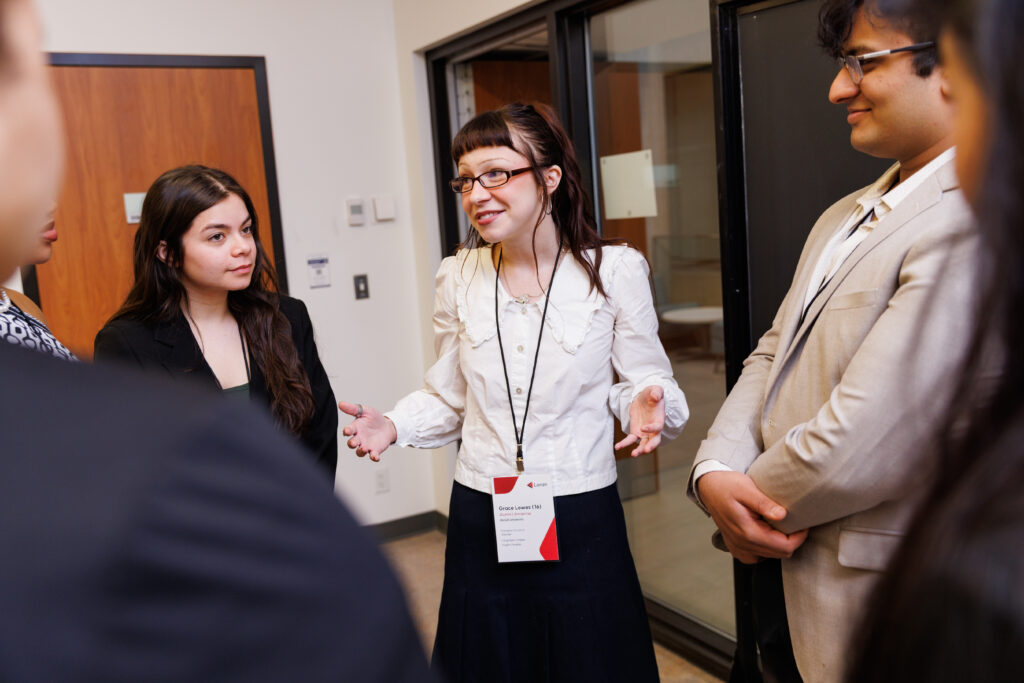
As a recipient of a GLocal grant, Action Pact focuses on reaching young people at a pivotal moment in their lives: the years just before and after they become eligible to vote. Rather than focusing solely on the act of voting, the program explores the broader ecosystem of civic participation: from understanding how and when to contact our elected officials to understanding how political systems translate votes into decisions.
For Grace, building Action Pact has also been an opportunity to reflect on her own experience. She often interrogates what might have helped her feel more inspired to engage with civic life as a teenager. Developing this program has allowed her and Lily to create the kind of resource they wished existed at that time and make it available to young people today.
This year, they brought Action Pact to Loran’s Nationals Weekend, where they facilitated sessions with Loran Scholars and Finalists from across the country. The workshop invited participants to explore how civic systems function, why participation matters, and where young people can have influence.
Offering an interactive workshop that moves beyond the familiar message of “just vote,” Action Pact participants directly experience the mechanics of democratic engagement. They take part in a mock campaign exercise, with some acting as candidates representing fictional political parties and others as constituents.
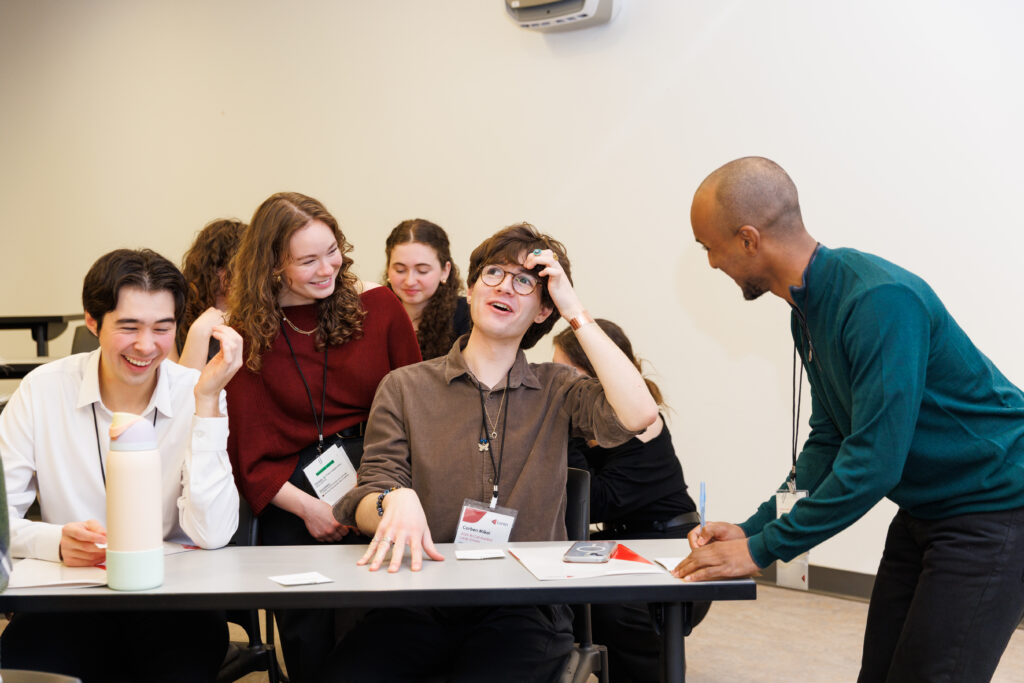
Some constituents are voters; others are not. Candidates circulate the room discussing issues such as climate and biodiversity, housing, and education. The dynamics quickly become clear: candidates instinctively spend more time engaging with voters than with non-voters, reflecting the incentives that shape real-world campaigns. Participants noticed the difference immediately.
“We talked about the difference between how non-voters and voters were treated,” one participant shared. “The voters definitely received more attention and concern, and I think that’s a really good representation of how the system works.”
The workshop also explores how Canada’s civic systems operate. From the responsibilities of municipal, provincial, and federal governments to the mechanics of first-past-the-post elections, Grace emphasized that understanding these foundations is essential for fostering meaningful participation. “If you don’t know what level of government is responsible for an issue,” she told participants, “it’s really difficult to advocate effectively.”
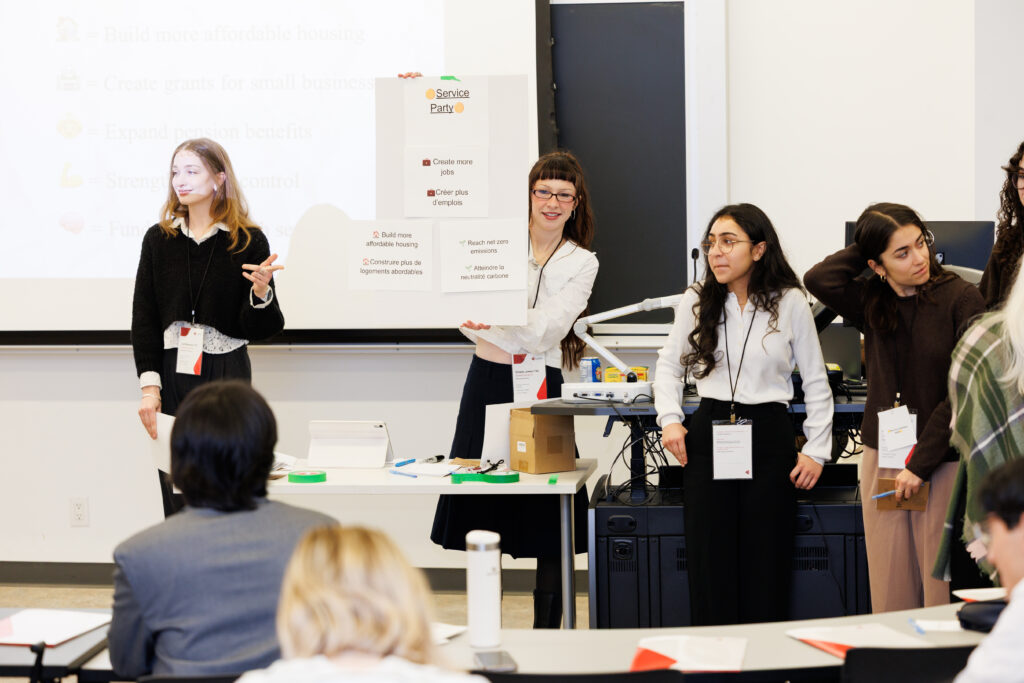
The pair has also developed a prototype tool called ActiVote, designed to help users connect their policy priorities with candidates in their riding. Participants rank the importance of issues such as housing, climate, jobs, and healthcare. The tool then identifies candidates whose platforms most closely align with those priorities, while also illustrating the strategic considerations voters sometimes face in their districts. The goal is to equip young voters with the information they need to make thoughtful choices.
Grace and Lily saw a gap in civic participation among young Canadians, and rather than accepting it, they set out to build something that could help change it. This initiative reflects something fundamental about Loran Scholars: when they identify challenges affecting Canadians, they believe that they have a role to play in addressing them, and they respond with curiosity, collaboration, and action in order to make a difference. In doing so, they are not only living out the Loran Scholars Foundation’s organizational vision of building a more civically engaged citizenry for the future of Canada, but they are also demonstrating that true leadership is often not a position, but the everyday practice of inspiring, engaging, and motivating those around us.
Last month, 90 students from all corners of Canada convened in Toronto for Loran’s National Selections weekend, hoping to be named a 2026 Loran Scholar. From those 90 finalists—each of whom has demonstrated strength of character, a deep commitment to service, and exceptional leadership potential—only 36 were selected.
These outstanding young people were chosen from a pool of more than 5,400 applicants. To find them, we look beyond marks to identify students with a guiding sense of purpose and a commitment to giving back. Starting last October, applicants participated in an in-depth, nationwide selections process, including essays, video submissions, and Zoom interviews, carried out by 400 volunteers. A weekend in Mississauga for National Selections was the final phase. The entire experience is rigorous but rewarding—a chance for each participant to grow, reflect, and build connections with other community-engaged youth. One scholar shared: “Nationals was the most amazing experience of my entire life, so far. Being in that group of people was incredible. I’ve never been part of anything like that before!”
Being selected as a 2026 Loran Scholar marks the start of a new journey of self-discovery, inspiration, challenge, and transformation that lasts a lifetime. Coming from 32 different communities across the country—from Nelson, BC, to Yellowknife, NT, to King’s Point, NL, and many more in between—the qualities and accomplishments of these students are unique. But what unites them as Loran Scholars is their willingness and courage to challenge the status quo, their capacity to collaborate to drive meaningful change, and their dedication to improving their communities, whether locally or globally.
Here’s a snapshot of what makes the new cohort of students stand out: One scholar serves her community from the ground up and the air down, tutoring fellow air cadets who also wish to obtain their pilot license and as a volunteer with the local fire department; one is bringing Indigenous perspectives to the Canadian Institutes of Health Research; one is a power tumbler, working to promote gender inclusivity in gymnastics; one addressed growing youth disconnect from the climate movement by organizing and hosting an event to uplift their voices and engagement; and another developed a non-invasive method to help paralyzed people regain movement using brain-computer interfaces. The leadership exemplified by the 36 new Loran Scholars gives us hope that Canada will thrive when such values-driven youth are supported as they imagine, explore, and build a brighter future.
The Loran Award gives these exceptional students a launchpad to unlock their potential and empowers them to make positive change in their communities. Loran Scholars benefit from a four-year, leadership-enrichment program, diverse opportunities for experiential learning, financial support throughout undergraduate studies, and a network of values-driven peers and mentors—unlike anything else in this country. Offered in partnership with 25 Canadian universities, it is valued at more than $100,000.
Sougui Abakar
Thorold SS
St. Catherine’s, ON
Anisa Abduhamedova
Britannia SS
Vancouver, BC
Annice Adams
McKinnon Park SS
Caledonia
Umayeer Ahsan
Bloor Collegiate Institute
Toronto, ON
Yousef al Mohamad
College Churchill HS
Winnipeg, MB
Moriah Aladejebi
Sackville HS
Lower Sackville, NS
Ala’ Alaiwah
Rutland Senior SS
Kelowna, BC
Léo Babineau
École Sainte-Anne
Fredericton, NB
Yasmine Ben Arous
Cégep Vanier
Montréal, QC
Anushka Bist
Oakridge SS
London, ON
Kate Blanchard
Valmont Academy
King’s Point, NL
Anna Brozek
Lockview High School
Fall River, NS
Madison Davey
Assumption College School
Six Nations of the Grand River, ON
Kaia Fitz-Earle
LV Rogers SS
Nelson, BC
Nathan Froebe
Carman Collegiate
Homewood, MB
Emily Gustus
Tisdale Middle and SS
Tisdale, SK
Ryan Hillier
Saint Malachy’s Memorial HS
Saint John, NB
Nimisciw Hills
Argyle Secondary
North Vancouver, BC
Finn Johnson
H.A. Kostash
Smoky Lake, AB
Timo Joubert
UWC Atlantic
Montréal, QC
Nathan Kashira
Kingston Secondary School
Kingston, ON
Hector Loiselle
Lo-Ellen Park SS
Greater Sudbury, ON
Allanah Masiglat
Glovertown Academy
Glovertown, NL
Leah McShane
École Sir John Franklin HS
Yellowknife, NT
Tessa Muddle
Strathcona Composite HS
Edmonton, AB
Lily O’Neil
Leo Hayes HS
Fredericton, NB
Kayla Okada
Nanaimo District SS
Nanaimo, BC
George Rayal
Collège Jean-de-Brébeuf
Montréal, QC
Cai Roberts
Campion College HS
Kingston, Jamaica
Bazyl Rudnicki
Middleton Regional HS
Middleton, NS
Harishvin Sasikumar
Mission SS
Mission, BC
Ibrahim Shaaban
Earl Marriott SS
Surrey, BC
Aayushi Sharma
Rossburn Collegiate
Rossburn, MB
Abeera Wasif
Bassano School
Bassano, AB
Chris Williams
Brebeuf College
Toronto, ON
Jin Lu Yu
Richmond Hill HS
Richmond Hill, ON
Want to stay informed? Sign up to learn more about our program, news, and events.