
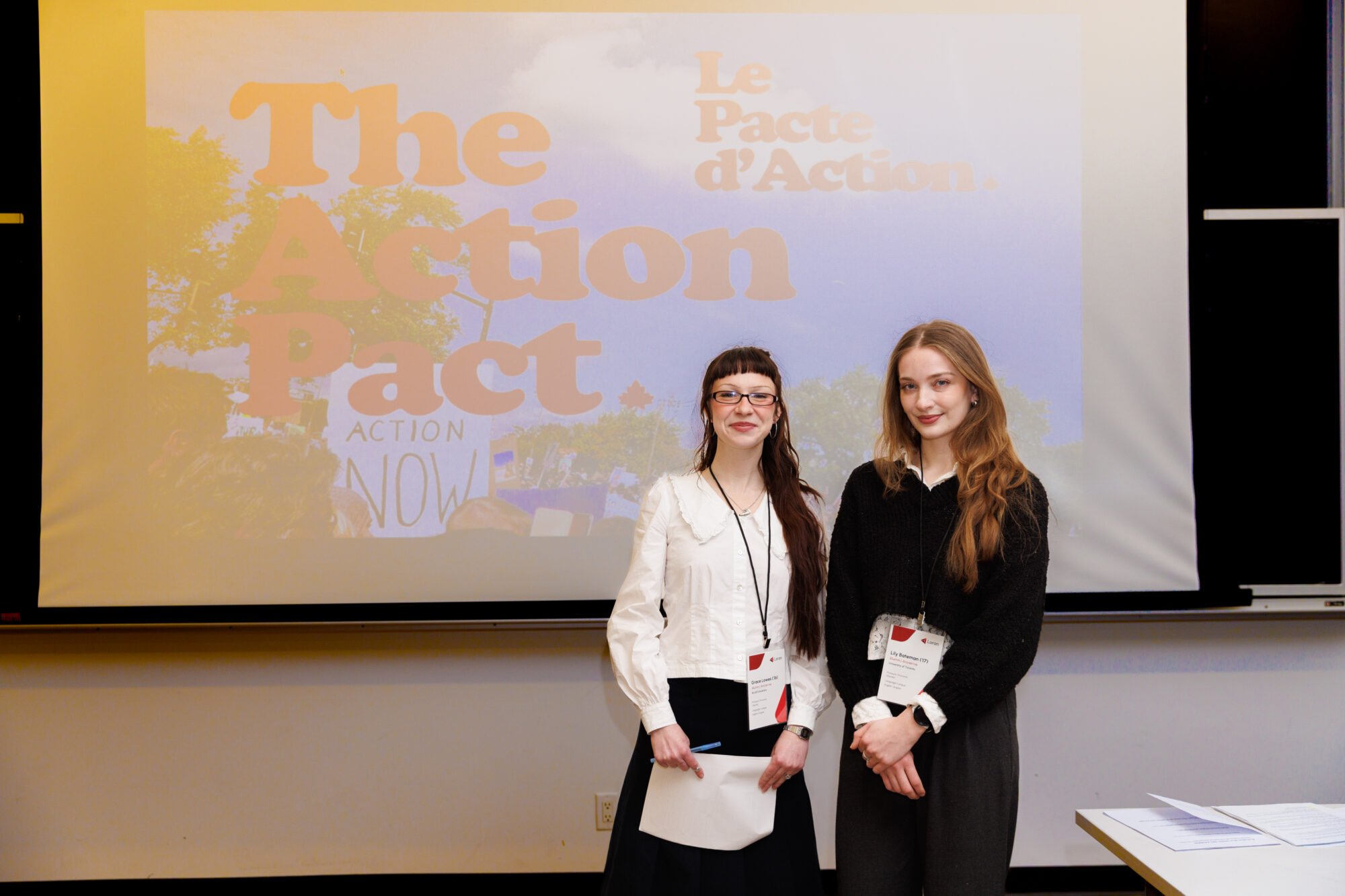
Across Canada, youth civic participation remains alarmingly low. In the 2021 federal election, fewer than half of eligible voters aged 18–24 cast ballots, compared with three-quarters of Canadians aged 65–74 (source). Loran alumni Grace Lowes (’16) and Lily Bateman (’17) could no longer ignore this worrying pattern and decided to act.
Their academic and professional paths are not centred directly on politics: Grace is a third-year Juris Doctor student at Osgoode Hall Law School. She is currently completing a placement with the Chippewas of Rama First Nation through Osgoode’s Intensive Program in Indigenous Lands, Resources and Governance. Lily is a senior AI infrastructure developer working in the cybersecurity industry who also volunteers with Artificial Intelligence Governance & Safety Canada. But, like many Loran Scholars, they share a commitment to identifying challenges that affect their communities and working toward finding—or creating—meaningful solutions.
Together, they founded Action Pact, an initiative designed to help young Canadians better understand how democracy works and how their participation can shape it. Their starting point was a simple but significant question: Why do so many young people feel disconnected from civic life?
“There’s no incentive for politicians to appeal to young voters because we do not show up at the voter booth,” Grace explains. “Young people don’t vote, don’t show up to town halls, don’t email their MPs. Decision makers respond to signals, and participation is measurable.” The problem was clear: when youth participation is low, youth priorities receive less attention. And when young people feel unheard, participation drops even further. Action Pact was created to interrupt that cycle.

As a recipient of a GLocal grant, Action Pact focuses on reaching young people at a pivotal moment in their lives: the years just before and after they become eligible to vote. Rather than focusing solely on the act of voting, the program explores the broader ecosystem of civic participation: from understanding how and when to contact our elected officials to understanding how political systems translate votes into decisions.
For Grace, building Action Pact has also been an opportunity to reflect on her own experience. She often interrogates what might have helped her feel more inspired to engage with civic life as a teenager. Developing this program has allowed her and Lily to create the kind of resource they wished existed at that time and make it available to young people today.
This year, they brought Action Pact to Loran’s Nationals Weekend, where they facilitated sessions with Loran Scholars and Finalists from across the country. The workshop invited participants to explore how civic systems function, why participation matters, and where young people can have influence.
Offering an interactive workshop that moves beyond the familiar message of “just vote,” Action Pact participants directly experience the mechanics of democratic engagement. They take part in a mock campaign exercise, with some acting as candidates representing fictional political parties and others as constituents.
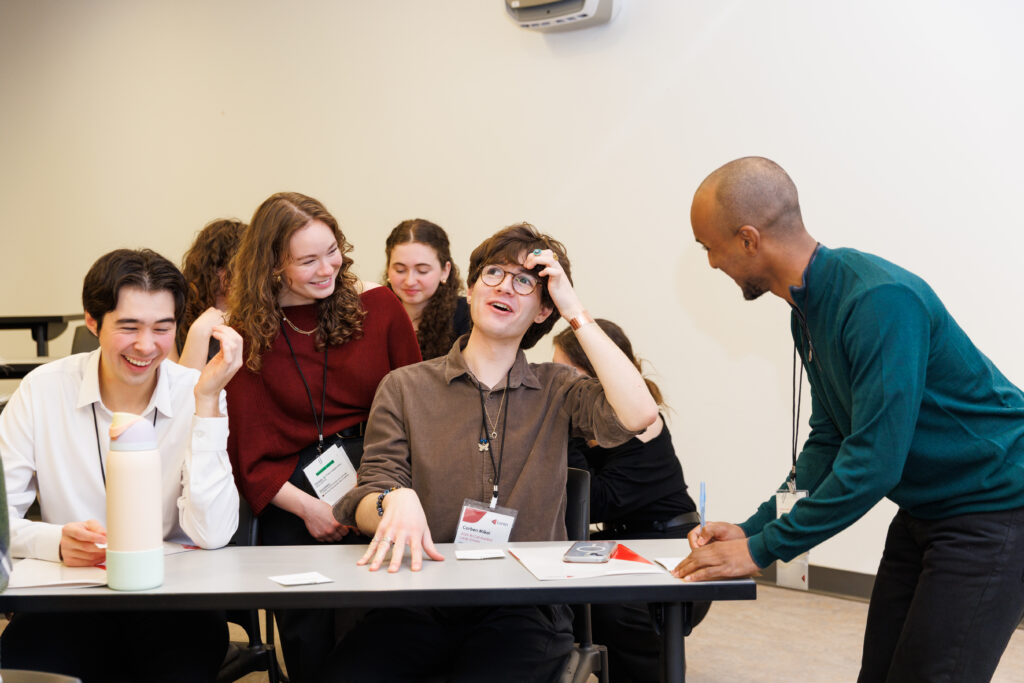
Some constituents are voters; others are not. Candidates circulate the room discussing issues such as climate and biodiversity, housing, and education. The dynamics quickly become clear: candidates instinctively spend more time engaging with voters than with non-voters, reflecting the incentives that shape real-world campaigns. Participants noticed the difference immediately.
“We talked about the difference between how non-voters and voters were treated,” one participant shared. “The voters definitely received more attention and concern, and I think that’s a really good representation of how the system works.”
The workshop also explores how Canada’s civic systems operate. From the responsibilities of municipal, provincial, and federal governments to the mechanics of first-past-the-post elections, Grace emphasized that understanding these foundations is essential for fostering meaningful participation. “If you don’t know what level of government is responsible for an issue,” she told participants, “it’s really difficult to advocate effectively.”
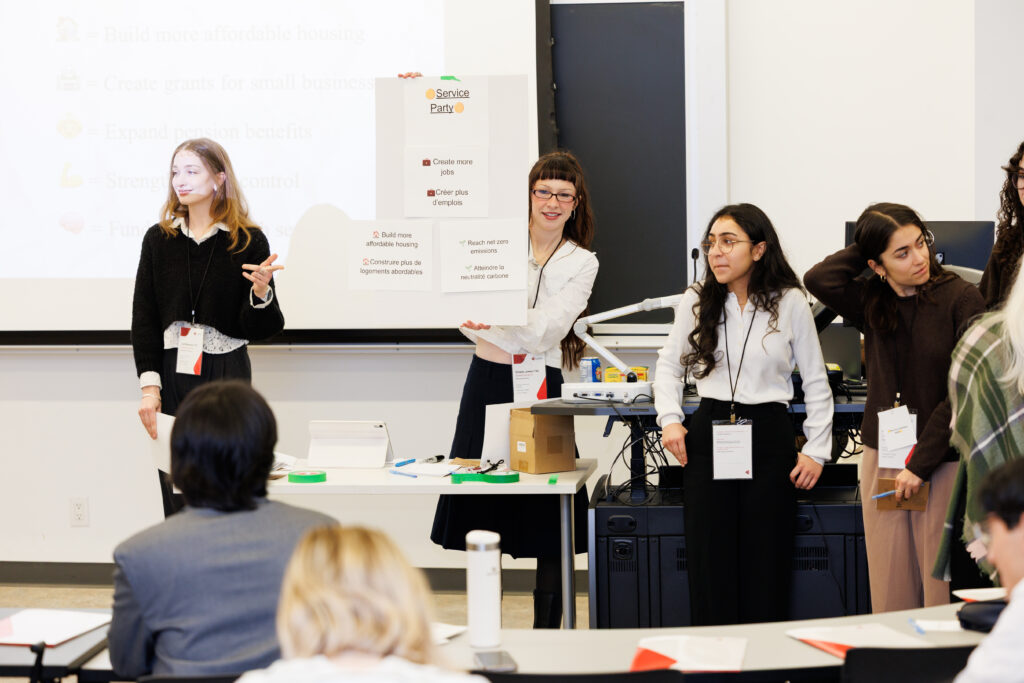
The pair has also developed a prototype tool called ActiVote, designed to help users connect their policy priorities with candidates in their riding. Participants rank the importance of issues such as housing, climate, jobs, and healthcare. The tool then identifies candidates whose platforms most closely align with those priorities, while also illustrating the strategic considerations voters sometimes face in their districts. The goal is to equip young voters with the information they need to make thoughtful choices.
Grace and Lily saw a gap in civic participation among young Canadians, and rather than accepting it, they set out to build something that could help change it. This initiative reflects something fundamental about Loran Scholars: when they identify challenges affecting Canadians, they believe that they have a role to play in addressing them, and they respond with curiosity, collaboration, and action in order to make a difference. In doing so, they are not only living out the Loran Scholars Foundation’s organizational vision of building a more civically engaged citizenry for the future of Canada, but they are also demonstrating that true leadership is often not a position, but the everyday practice of inspiring, engaging, and motivating those around us.